Bolom Yajval Te’tik — Jaguar, Lord of the Mountain

of Dyg'Nojoch

Exhibition of Dyg’Nojoch
at Espacio MUY

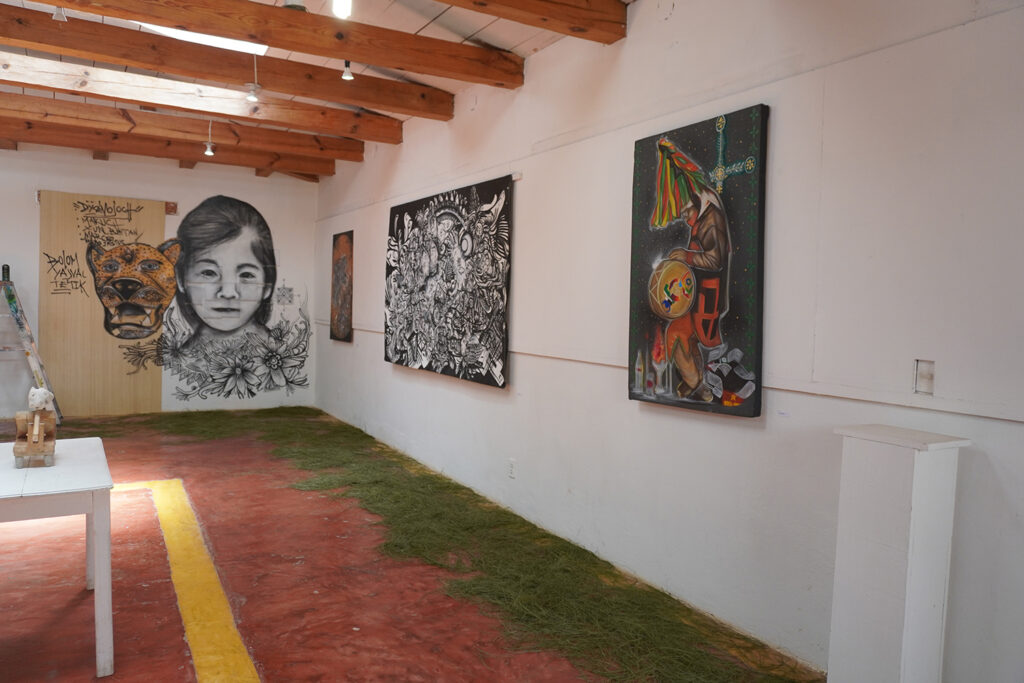
This multimedia exhibition, collectively curated by the MUY team together with the artist, includes eight paintings in various formats, reflecting a personal and communal concern with redefining contemporary Maya art today.

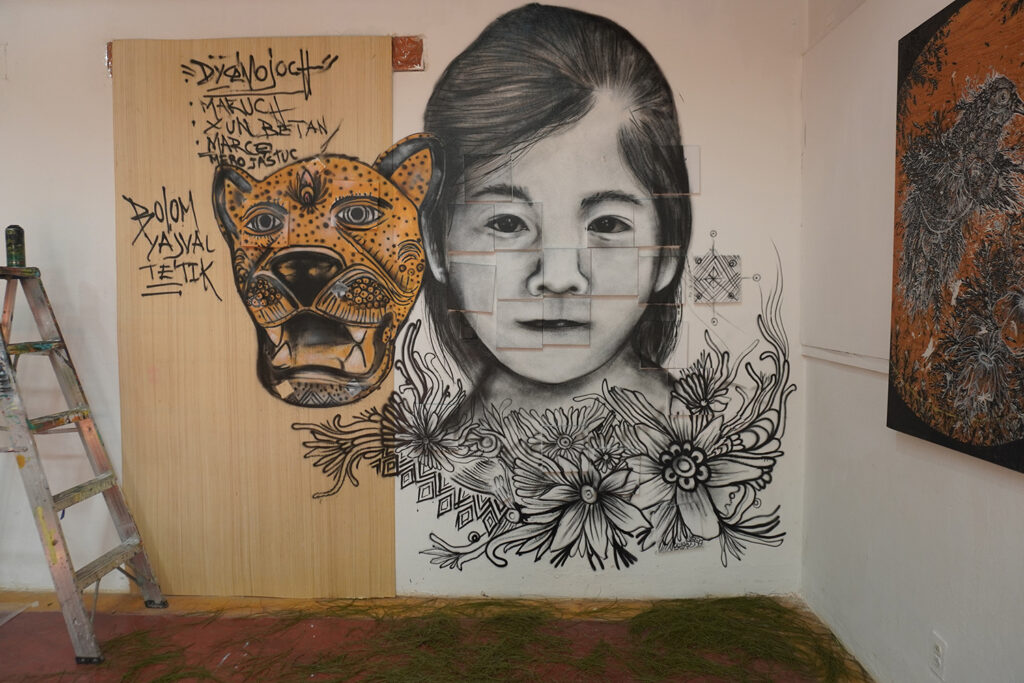
We celebrate a festival orchestrated by Dyg’Nojoch, featuring diverse forms of art from “his tribe”: a performance by Maruch Méndez (a prayer), poetry by Marcelina Rodríguez, poetry by Xun Betan, and music by Mero Jastuk — all of them of Tsotsil origin. The exhibition also presents an on-screen compilation of his street artworks created in different parts of the country.

Dyg’Nojoch is one of the Tsotsil creators who has contributed most to the reinvention of urban Maya art. He is originally from Yavteclum and was born in 1989, to a father from Chenalhó and a mother from Mitontic. At an early age, Dyg’Nojoch went to live with his mother in Jobel and settled in the Northern Zone, the area with the highest levels of Tsotsil and Tseltal migration in the Highlands. After finishing high school, he entered the University of the Highlands of Chiapas, where he studied Graphic Design.

He became acquainted with the urban hip-hop tribes and worked as a B-boy, practicing breaking. However, after injuring his arm, he had to leave dancing behind and turned to art as a form of therapy. He developed his skills by learning different urban techniques, such as street art and graffiti, which he combined with his academic knowledge of graphic design.

In 2011, his artistic career received an important boost when he was selected for the book De mi barrio a tu Barrio, published by the Goethe-Institut. It was the first time he traveled outside Chiapas to paint. Subsequently, Dyg’Nojoch traveled to different parts of Mexico, creating murals in Oaxaca, Puebla, Coahuila, Querétaro, Yucatán, Quintana Roo, and Mexico City, where he exhibited a masterpiece commemorating 100 years of Mexican muralism at the San Ildefonso Museum. Outside Mexico, Dyg’Nojoch has participated in group exhibitions in Germany and Guatemala, and his work has been presented in Las Vegas and New York.

Dyg’Nojoch is a principal promoter of the “GAM” (Graffiti, Mural Art) project, which since 2017 has been creating murals with national and international guests in the outskirts of San Cristóbal. The artist’s favorite format is large-scale work, with a particular preference for walls, guided by the philosophy that art is for everyone.

Dyg’Nojoch emphasizes that popular art is, in reality, medicine for the soul, the ch’ulel. At the same time, the artist expresses himself through more intimate works on canvas using acrylic and spray paint. In this series of paintings, he seeks to think about and reflect on the origins of the history of the Maya-Tsotsil people while living in the city.

Dyg’Nojoch’s ingenious combination of classical and contemporary elements, infused with irony and a rebellious, proud sense of humor, is truly unique. “Art makes us more sensitive; it brings us together,” says Dyg’Nojoch.

Espacio MUY
August–November 2026
Artworks

Bolom yajval te’tik

Oil on canvas
12 panels, 6x2 meters each
2024

A respected Maya deity with deep significance, strong to our roots and worldview within the stars, shamanism, warriors, and the imposing force of the feline being.

This piece was created for the Maya Museum of Tulum under the exhibition titled Jaguar, Owner of the Mountain; this monumental artwork is now being exhibited for the first time at Espacio Galería MUY.

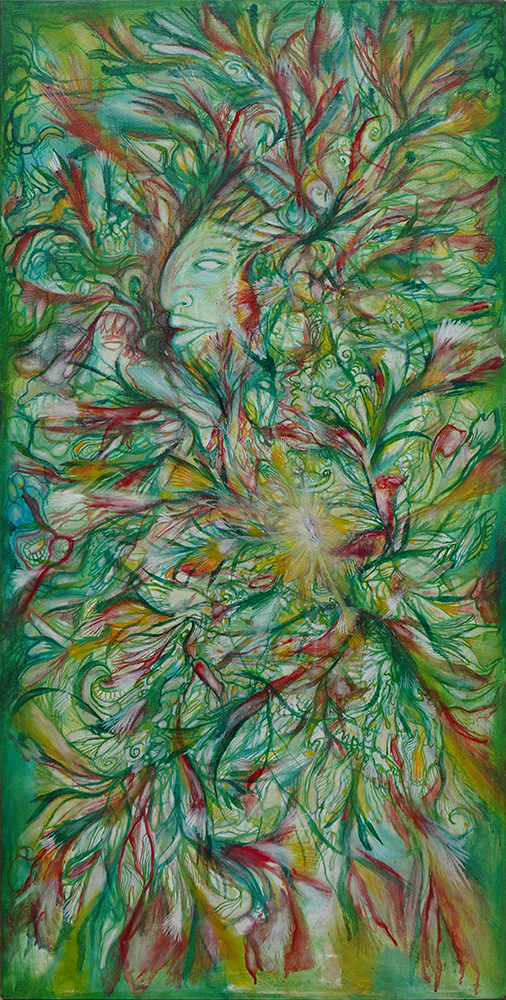
Sprout

Oil on canvas
60x120 cm
2020

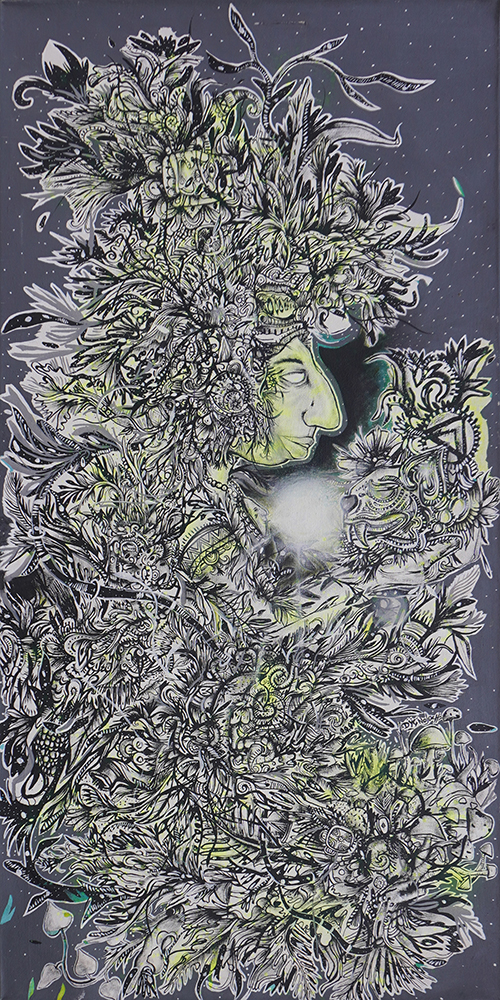
It is the birth and connection with nature, a seed that germinates a universe and through it becomes intertwined and woven. And it grows from its own microorganisms until taking a form such as a human or plant, but in the end, everything is a connection.

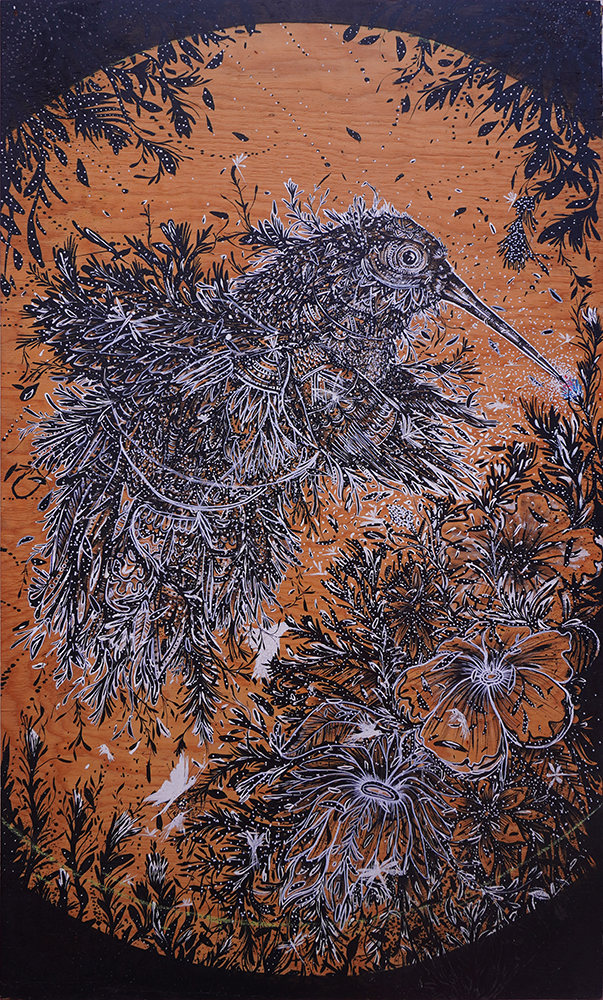
Ts’unun

Mixed media on wood
120x75 cm
2022

Receiving an offering, where its body radiates life among plants—an organic being, a mirror of the abundant jungle itself. It is considered a sacred messenger of the gods, responsible for carrying thoughts and desires from one heart to another. In the legend of the jade hummingbird, the gods created everything on Earth and assigned tasks to every animal and plant. Upon finishing, they realized no one was left to carry the desires and thoughts of humanity. With no clay or corn available, they took a jade stone, carved a tiny arrow, and blew on it. The small arrow came to life and became the hummingbird.

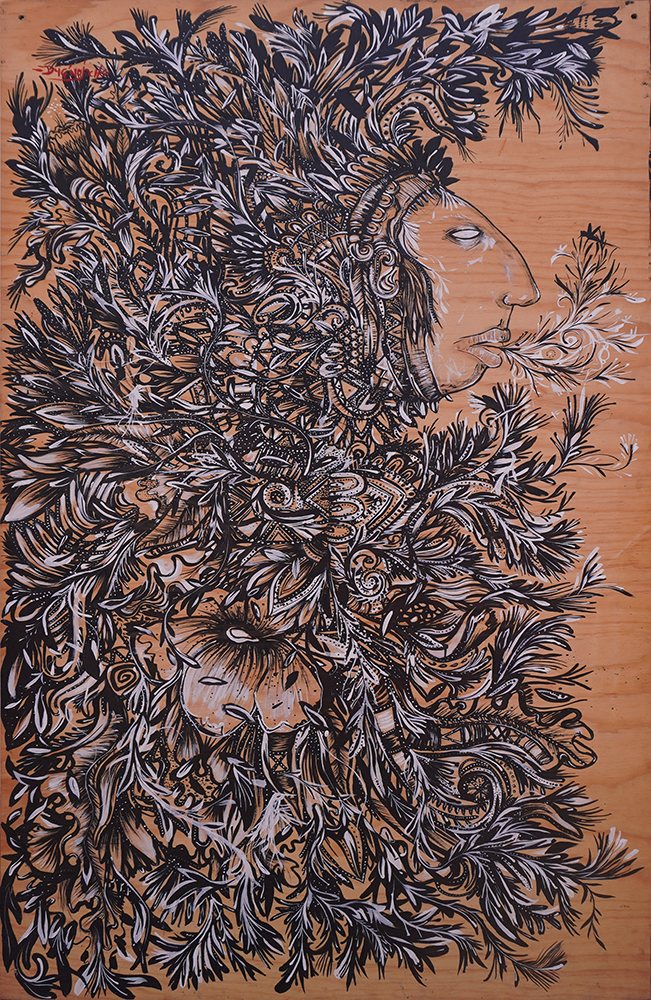
ik´: Wind

Mixed media on wood
120x75 cm
2022

Wind, birth, the creation of gods fashioning the universe across different spaces, hummingbirds telling legends of messengers, symbols reborn in ears of corn recalling that we were made from maize, organic shapes symbolizing our connection with the organic.

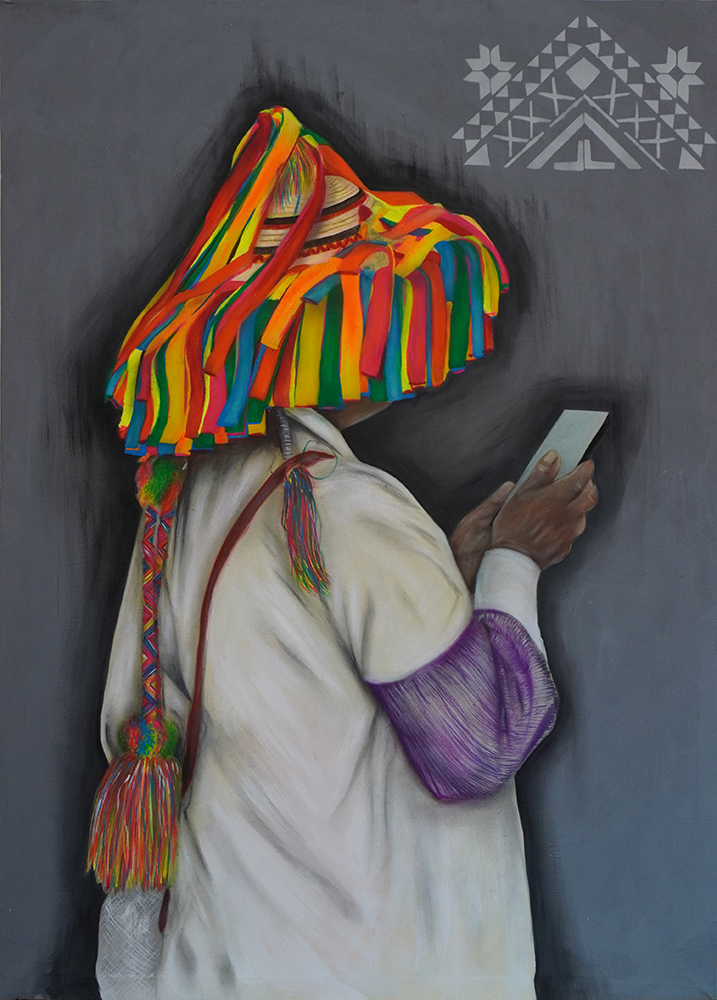
Bats’i wifi

Acrilic on canvas
119x169 cm
2026

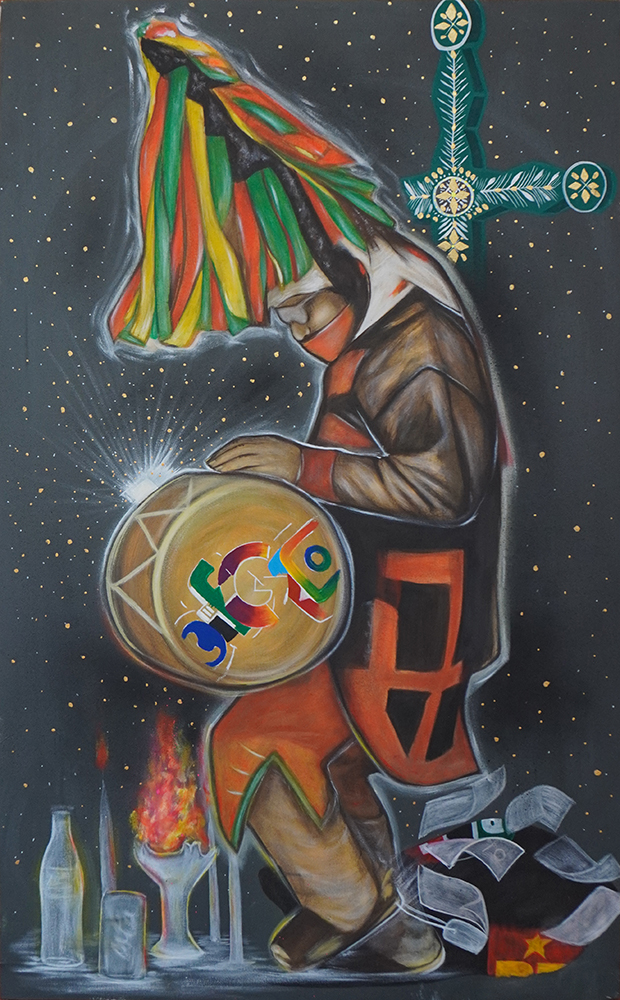
Man from the town of Chenalhó with a cell phone, adapting to technology and new applications, and perhaps learning to navigate the universe of the internet—seeing other worlds through it or simply polluting his mind, worldview, and customs, forgetting his own and changing bit by bit.

Untitled

Mixed media on canvas
130x80
2026

We follow tradition, but present-day technology is always present. Classical Maya and Olmec culture, deities of the sky water. The jaguar is present in both. Acrylic, applied with a brush and as a spray. The inspiration. The ocean of the cosmos. It ends up being the stars of the universe. The strength of shamanism, the warriors, the warrior-priests. Precisely the medium dark tone belongs to the sea of the sky.

Offering

Acrilic on canvas
118x59 cm
2022

A divine being offering to the gods. It is a jaguar head. When warriors sacrifice a jaguar, it becomes one. It is giving a jaguar skull. It is surrounded by nature, flora, and fauna, which turns out to be a being that unifies our reality and the composition. In pre-Hispanic times, they used two dimensions, or the flat form.

La creación

Acrilic on canvas
140x220 cm
2022

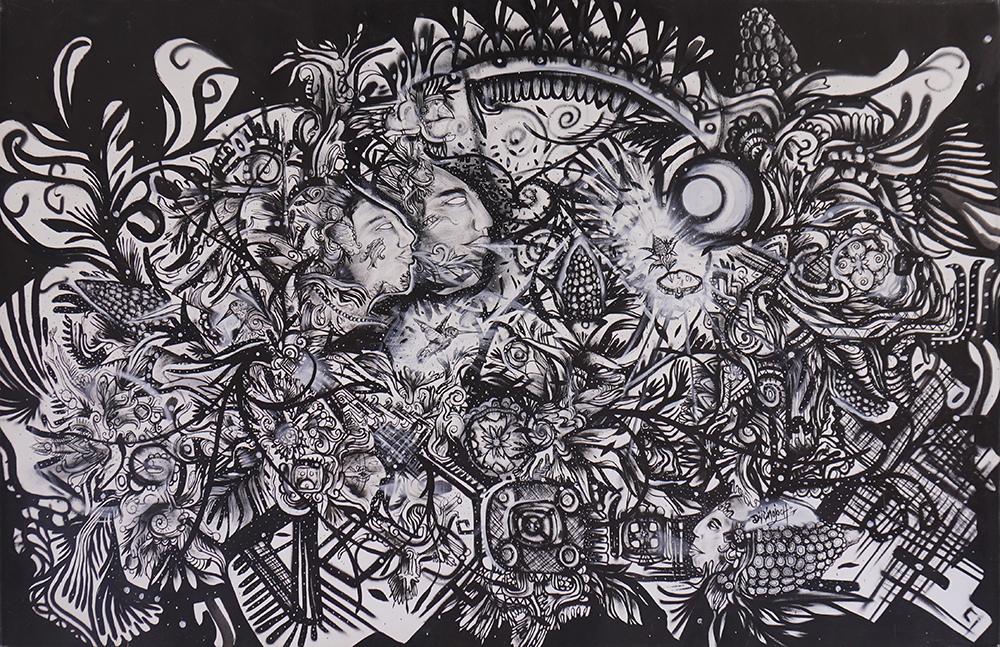
A creation of a galaxy. The gods are creating a universe in the waters of the cosmos, the plants, the animals (including humans). The gods are blowing the breath of creation.

More figurative (not as realistic). He has been expanding his repertoire in terms of material and style. Therefore: “I don’t want to stay in folklore; I paint thinking about culture, but we have to think about nature, for example” and several crucial topics for people today.